

Pattern
MVC (Model–View–Controller) Design Pattern
The MVC design pattern has existed for several decades and has been widely adopted across many programming technologies. It has been used in languages and platforms such as Smalltalk, C++, Java, and more recently C# and .NET, for building user interfaces.
Key Features of the MVC Pattern
The pattern was originally introduced in 1979 under the name Thing–Model–View–Editor, which was later simplified to Model–View–Controller.
MVC provides a clean and effective way to separate concerns within an application, such as separating data handling logic from user interface logic.
Although MVC introduces a bit of additional design complexity, the long-term advantages greatly outweigh the extra effort.
MVC is especially well-suited for web applications, where clear separation of responsibilities is crucial.
MVC Architecture Overview
The MVC architectural pattern divides the user interface of an application into three distinct components:
Model
The Model consists of classes that represent the application data and contain the business logic required to process that data.
View
The View is responsible for presenting the user interface. It defines how the UI looks and is typically written in HTML, focusing only on display and layout.
Controller
The Controller manages user interactions, controls the application flow, and coordinates between the Model and the View.
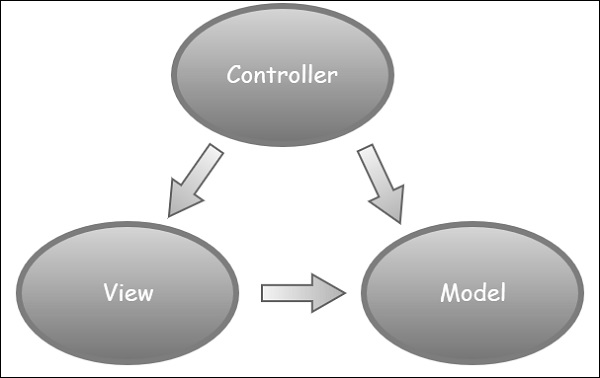
Core Idea Behind MVC
The fundamental concept of MVC is to have a View component whose only responsibility is rendering the user interface—whether that UI is HTML in a web application or widgets in a desktop application.
The View retrieves the required information from the Model, which stores all the data needed for display. Views generally contain very little logic and focus mainly on presentation.
In many web applications, the View may contain no programming code at all, only HTML templates with placeholders that display data from the Model.
The Controller acts as the central coordinator. When an HTTP request is received by an MVC application, it is routed to a Controller. The Controller then decides how to handle the request—whether by interacting with the database, accessing the file system, or communicating with the Model—and finally selects the appropriate View to render the response.